Pages

Monday, January 1, 2018

Make a Ringtone with Garage Band


I love Garageband, I love Android and I love Ringtones. Naturally, II've created a free how-to create and export a ringtone with Garageband. It's super simple, and very rewarding.

First, you need to either make a song in Garageband or import some music into Garageband. 

Apple has a straightforward tutorial on this. so I won't reinvent the wheel here.

https://support.apple.com/kb/PH25022?locale=en_US

The fact is, you can turn ANY Garageband project into a ringtone. 

The three simple rules are:

1. Create a cycle so that you have no more than 40 seconds of music.
2. Export the song as a ringtone to iTunes.
3. Find the file on your computer and add it to your Andriod phone (or use iTunes to sync it with your iPhone).

If you use android, you can add the song file to your device's music folder and select it as a ringtone. But you'll need some more instructions to convert the ringtone from OSx to Android.

On your Mac, go to spotlight search, and type “iTunes Media”. Then click on “Import” - it’s on the right hand side.

Once in the import folder, you should see your ringtone. That’s the file you want to put on your phone! Mine was called “Reminiscence”. The problem we have is that Android doesn't recognize the m4r extension. Luckily, the fix is super easy.


To make the ringtone work with andriod, you just need to click on the song name and change the extension from m4r to m4a. That’s it!


But make sure you are changing the actual extension and not just the name of the file.

Follow these steps to make sure you have changed the extension.

First, press the control key and then click the file (this is Mac's stupid way of right clicking if you haven't set up right click in the trackpad or mouse settings --- which I highly recommend doing). This will bring up something called a ‘context menu’. In the context menu, click “get info”


The next thing that pops up will be full of information. Find the file name and file extension … it will be nameofthesong.m4r


Change the m4r to m4a and go through the prompts if there are any.

Then THAT’s It!

Enjoy your shiny new ringtone! :)

Saturday, September 30, 2017

Black Ghost Audio

image courtesy of black ghost audio - www.blackghostaudio.com

My Friend Charles over at Black Ghost Audio has created a nice list of places to go for production advice, as well as a list of recommended software. He's also got tons of tutorials of his own including a free mixing tutorial.

Check it out!

https://www.blackghostaudio.com/articles/the-ultimate-music-production-database


Wednesday, June 21, 2017

Speaker and Room Calibration


I recently discovered speaker calibration. I thought I was doing everything right by putting broad band sound absorption on my walls etc, but my mixes (and then later my masters) were still pretty messed up. Specifically despite nearly a year of work, they still ended up sounding cheap. I couldn't figure it out.

Sunday, June 4, 2017

Mastering is HARD!


Before I get into this, I'll front load the conclusion: In all the talk about mastering, if your monitoring isn't flat, even the best ears won't do any good. Of course, the compromise is to intimately know what your gear sounds like ... but I think that takes thousands of hours of critical listening and an extensive knowledge of acoustics.

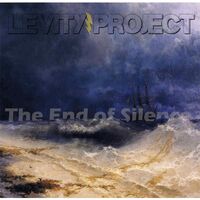
I self-mastered my last album (The End of Silence). I was very excited about it. I had resolved to remove myself from my music in order to master it. I couldn't afford an ME at the time, but I badly wanted to release my album.
 
I believe I got 70% of the way there with the help of the free videos and articles at productionadvice.co.uk, as well as the information available at http://www.masteringtuition.com/

I think I managed to successfully divorce myself from my music so that I could look at it as objectively as possible. I analyzed it intently for problems without thinking about the mix and the compromises that led to things sounding the way they did.  I carefully selected and manipulated various plugins to (as transparently as possible) make my music loud as well as dynamic as well as punchy as well as clear as well as crisp. I compared it  on various playback systems. I also compared it to Auto mastering (mastering box, AAMS, e-mastered, LANDR), other pro masters, and the final mixes - and I level matched them all so that I could be as accurate as possible!

It was extremely painstaking, aggravating, frustrating, rewarding, happy , sad ... it was every emotion I can think of wrapped into one giant hairball. 

But I have now realized my monitoring situation was utterly inadequate for mastering. 

............... :(

After listening to one track (Swallowed) and then every other track on a system tuned to be (what I believe is) flat (using Sonarworks reference 3), I can hear a terribly pronounced bump in the upper mid range which is making everything sound cheap. I re-checked on my car, and listened again on everything I have.  Now in every case, I hear that cheap sounding boost in the 4-6k region. The sadness of this realization is nearly overwhelming.

So the long and short is that after listening on the tuned system, I decided to make two changes - a wide 3db cut at 4.1kz and a narrow 1 db boost at 10khz ... the result in the song :swallowed' is that it's become the song I was envisioning in my head all along, and it sounds pretty well the same on everything I play it through.

Now my hope is that there isn't some other etherial thing I'm missing ....

Sheesh mastering is HARD! 

Saturday, May 6, 2017

Improve or Die


If you've been playing guitar for more than 5 years you still only know one strumming pattern, do yourself a favour and either don't play live or resolve to get better and start taking lessons (or try justinguitar.com).


Are you improving at your musical craft?

If you play an instrument, do you practise? If so, do you practise at least weekly (if not daily)?

If you are a sound engineer (or a hobbyist home studio enthusiast), do you hoan your skills regularly by working on new material?

If your answers to any of those questions is "no", you are in danger of putting a hard limit on how far you will be able to take your skills. You might also be giving yourself a one-way ticket to irrelevancy if your skill as a musician is directly linked with some sort of live performing arts.

What are all of those?? If you don't know, maybe it's time to learn!

My problem has always been that I'm interested in way too many things. I enjoy writing, recording, mixing, mastering, live mixing, and I dabble in graphic design, plus I'm a teacher by trade so I have a full time day job.

I also play guitar. I sing. I play bass. I kind of play piano and kind of play drums. I lead a worship band, I write music. And I love it!

But what started to happen in the middle of doing all that stuff I love doing is I began to 'kind of' just do everything. I wasn't becoming highly skilled in any one thing. So, recently I decided to let some of my skills coast and really focus in on singing and playing electric guitar. Luckily, the guitar playing has a side benefit of searching for tone ... which lets me keep my chops up a bit in mixing. Plus, I still lead the sound team at Church so I get to sit back every so often and manage the big picture of mixing the band, which I do enjoy quite a lot.

There's something special about the feeling of taking the band from sounding out of focus and off-balance to sounding tight, focused, deep, clear and .... full. There's a lot of adjusting which goes into making a band's sound jive. Often I'll go up and fiddle with the settings on one of the guitarist's amps until it sounds right rather than fiddle with the limited EQ knobs on the sound board. "get it right at the source" is my motto.

Anyway that was a bunny trail.

You need to practise, or you won't get better. It's that simple.

And if you want to get a LOT better, on top of practising you really need to learn (and then practise) new things. For example, if you play guitar, learn some new licks or chords, or new songs, or learn some new scales and challenge yourself to integrate them immediately into your repertoire. Learn a new strumming pattern, or learn to play in different time signatures like 6/8 and 3/4 (that one is super important if you want to play with a band).

If you sing, and especially if you lead at church or in a band, learn how to pick, play and/or write songs in keys that work with your voice. Another good skill to learn is how to transpose music so that it works for you. Too many worship leaders pick songs in a key they think will work best for the congregation. That's noble and all, but the truth is it doesn't really matter what works for the congregation because if it doesn't work for you, it's not going to connect with anyone else either.

If you're still skeptical, hear me out.

Go to a big arena concert and listen to the crowd belting out their favourite songs in unison. Nine times out of ten, those songs are way too high for people to sing on their own. It would likely sound bad if they tried. But in a large crowd, it doesn't matter. You just sing it together. And it sounds AWESOME! You strain your voice along with everyone else and it creates something epic!

You know what doesn't sound awesome? A singer who chooses keys for songs that are too high for them personally, so they have to yell or screech into the microphone to get the notes out. That usually sounds terrible, unless it's an effect you are going for and can actually pull off (not many people can!).

Think about it.

Wednesday, April 12, 2017

Choosing an Electric Guitar Amp


This is what playing guitar feels like these days. The variety is absolutely insane, and the opinions on the variety can be equally insane.

Sunday, February 12, 2017

Small Church Big Sound


One of the things that I do when assessing a Church sound system is to ask the question: is what we've got working for or against us?

In the case the church I work at, when I got there we had a small sound system that really was not working for us.

Friday, January 6, 2017

Church Sound 2: Guitars


In my 20 years of experience as a musician, I've found that you don't have to break the bank in order to get great guitar tones.

Church sound

Photo via Wiki commons

One of my biggest pet peeves is bad sound at church worship services. I've been in big churches, small churches and just about everything in between. Nothing hurts my ears more than hearing a band which has been poorly mixed, weather it's a rock band, a pop music group or a worship band.
And by far the consistently worst sound that I experience is in church worship services. I think it's because the people behind the mixing boards at the vast majority of churches are not properly trained. It seems that anyone with even a slight interest in sound can work the sound board at church without having to go through much, if any training. It's an unfortunate reality, but I think it's overcomable.

Monday, October 24, 2016

More Thoughts on Robo Mastering


It seems whenever the topic of auto mastering comes up, a fire gets lit. It's easy to forget that real people on all sides are working with a common goal in mind: to help people make better recordings with less effort and less out of pocket cost.

And I don't really have a beef with Auto Mastering programs. I just have rarely been happy with the results I've gotten from them. However, I have gotten results that I've kept and released, and AAMS in particular was one of the programs I used to get results on my most recent Album "The End of Silence". I also used EZ Mix 2 on one of the Masters and in the mixes for certain things that I wanted to hear, which my others plugins couldn't do.

The end result was that I used a combination of things, not just AAMS and EZ mix to get the results I wanted out of the final Masters. Most important of all, I used my ears and a monitoring system that I trust and know.

To this end, I want to point out something - getting truly great results out of your mixes takes at least these five things:

1) Recordings that are well done
2) Mixes that sound great and are well balanced
3) Mastering that fills in the gaps and tweaks the balance of the EQ curve.
4) A monitoring system you absolutely trust
5) Objective 'ears'

This is much harder than it looks, so I encourage you to learn as much as you can from sources that are reputable. I love recording forums, but many times the advice I've gotten on them has led me astray.

For The End of Silence, I had mixes I was happy with overall, but there were also problems due to some bad sampling software that introduced a ton of aliasing into the Mix. Because I couldn't afford to just go out and get new sampling software, I had to fix the aliasing in the mix using EQ. This was no small task. I also did some early takes where I had done a sloppy job at recording the instruments. I re-tracked and re-mixed lot of the material this past year to get things up to a standard I was happy with. I would say that I'm overall pleased with the results, but I also think I can do better. That's perhaps a perfectionist tenancy I have, but it also propels me into more learning.

I found that I was also able to use some Mid/side processing techniques to fix more of the aliasing during mastering. The final masters cleaned up nicely and are 100% better than the original mixes. Many of those tracks were run through AAMS, but it also took me making decisions about what I liked and didn't like each time I ran a track through the program. And those decisions did not come until I had listened meticulously to each master on several playback systems that I trust. Some of the masters lacked punch, others lacked clarity while others had some combination of both.

So what I ended up doing was subduing the loudness maximizing from AAMS, then I ran my final mixes through the program until I found something I was happy with. I then imported the 32-bit masters from AAMS into REAPER, and completed some final EQ adjustments, compression, and limiting to get what I chose as the final versions.

On one song, "Our Father", the results I got from AAMS were pretty well exactly what I was looking for. I only took out a bit of harshness in the mid and sides, and did the final loudness maximizing. It was done very quickly.

On another song, "Disappear", I ran it through LANDR and wasn't at all happy with the results. Then I ran it through AAMS and wasn't happy with the results. Then I ran it through Mastering Box and generally liked what I heard, except there was an insane amount of bass distortion and the mids were too scooped. So, what I decided to do with that one was loudness match each with the original and make manual adjustments until I had something I liked better than the other automated masters.

This begs the question: Is auto mastering worthwhile? I think the answer is yes and no. It is not an either/or situation.

I think it's important to test the automated waters and see if the results are better than what you are able to do on your own. If you can afford it (sometimes we will do it for free), get a mastering engineer to master a song and then compare the pro or semi-pro master with the automated masters. Whichever one you like best, go with it! Because this is really about your music and what will make you the most comfortable releasing your art into the public sphere.

Thursday, October 20, 2016

How Not to Screw up a Mix


I learn a lot through trial and error. But that also means a get frustrated often. Another way of putting it is that I learn what not to do by doing it, sometimes over and over until my brain finally catches on that "doing x,yz will not give you the results you want"!

Here are a couple of the biggest lessons I've had to learn:
  1. recording everything hot will give you a "cooked, smeared, un-detailed" sound, 
  2. gain stage your plugins. Clipping one plugin can sound bad. Multiply that by a channel with 5 plugins and compressors, and you'll have a real problem! The compressor (not to mention compression and limiting during mastering) will make the clipped sounds nice and loud. 
  3. Follow an established protocol for your work flow.  I have created my own, and you should too. Maybe I'll post mine up if there's any interest. 
  4. Regarding #3, don't just have a protocol or work flow that you don't ever look at. Study it, know it.
  5. Don't bite off more than you can chew. Sometimes you don't realize you've done this until it's too late ... and that's OK. But do your work in chunks and take regular breaks. this will help your brain, your ears, your eyes and your relationships.
  6. Follow through on your promises/release dates etc. I had been working on an album for 8 years. That's insane. I set a release date for August 2016. I stuck to it and I'm glad I did! now I have 6 more songs percolating. 
  7. Always reference your mix to a *good* pro mix in the *same style* as your music.
  8. Always loudness match the reference tracks to your track. This means turning down the reference do it has the same RMS loudness as your song. This is incredibly important.
  9. Always reference each mix on a variety of playback systems,  but especially in a vehicle. Vehicle sound systems have an uncanny way of exposing mix issues. I recently listened to a remix/remaster of Pearl Jam's first album. It sounded fine enough on headphones, but the whole album totally fell apart in the vehicle. I much prefer the original mixes, despite all the reverb (it was the 90s). The remixes are tinny, way overcooked and terribly honky.
  10. Use an AB plugin like TB Pro Audio's AB_LM (freee) or Ian Shepard's Perception plugin ($149) to loudness match before and after your FX chain.

Saturday, October 15, 2016

Level Matching and "Robo Mastering"


I ran a poll recently on a couple of home recording forums where I asked people to identify the best sounding master out of 5 possible masters.

I used the following to "remaster" an old song called "Future"
AAMS
LANDR
Masteringbox
A Professional Mastering Engineer
A Master that I produced myself

If you want to do this blind test yourself, check out my web page:
http://www.levityproject.com/home-mastering/mastering/audio-mastering-shootout

Since was a blind test, no one knew which one was which. This made things interesting ... and the results surprised me (sort of). One of the auto services actually got more love than the rest, but the reason why might be more predictable than you would think. I'll explain in a later post.

To complete the test, you will need to download Reaper, which can be found at http://reaper.fm/download.php

There are two Reaper Files in the test. One is not level matched, and one contains masters that I have level matched so they are all the same perceived volume. Try out both and see which master you like best in each.

Once you made your choices, check the results page to see which master you chose! Leave a comment to let me know which you preferred.

Leave a comment here or on the facebook page about which master you chose. I'll explain why you may have chosen it in a future post, but I believe the results will be fairly consistent (as they were when I ran the tests in some audiophile forums).

Photo Source: Wikmedia

Sunday, October 2, 2016

Microphone Hack - Make it Sound Like a Neumann!


This is one of my favorite hacks of all time. I have some decent condenser mics, but what I've really wanted was a Neumann u87. It's almost $4000US, and I can't afford to spend that kind of money on a microphone. 

Well, I found and impulse model that completely negated my desire for that mic! I attached the model so you can use it, too!  You will need either SIR or Reaverb to load the impulse model into your DAW.

I like Reaverb myself. Here's a video on how to use it!


Here's what to do
  1. Record yourself using a large diaphram condenser or sm58. Stand 15cm/5in away from the grill. To tame sibilance, rotate the face of mic to the left or right slightly. 
  2. Load up the Neumann U87 impulse on your take using sir or reaverb
  3. Be amazed! The sound is awesome. It's not perfect, but it's really good!
  4. Hack #2: if you are using an sm58, load up the impulse with -sm58 in the title. This negates the sound of the 58 and adds the character of the u87. Fantastic!!
Click here to download the Neumann u87 impulses

Monday, September 26, 2016

How to Write a Song - Part 2 - Poetry


Poetry can take many, many forms. Instead of listing and explaining them all here, I'm going to link you to a great resource on poetry and the mechanics of poetry.

But before I do that, take a minute to read this article about the key differences between straight poetry and song lyrics. The author contends that song lyrics are not true poetry, and to some extent he is right. Popular song lyrics have become overly simplistic and un-thought inspiring as the 21st century has rolled along. I am hoping this will change for the better (and sooner than later would be great!). To be fair, there are some fantastic singer-songwriters out there who are writing thoughtful, inspired lyrics. They just aren't in Spotify's Top 50, which is too bad.


Even if Poetry and Song lyrics aren't exactly the same thing, songwriters can learn a lot from understanding how poetry works. I will save you hours of looking around and researching and point you to one of the best websites I have found on poetry writing. The following resources come from www.powerpoetry.org. It's a great site, and a HUGE site. Take a day and explore it; take up the challenges presented in the articles. Write some poems! Who cares if they're "good". Part of the thing about writing is that you are going to need to get used to working through several crappy first drafts before you finally create an acceptable version you feel is worth publishing. I've left songs for years because I wasn't happy with them. But then in a sudden flash, I would change two words and presto! The song is done. 

Anyway, I digress. Here's the resource.


And so, so, so much more!

When you are writing poems that will be put to music, remember that you can completely mess with the style of poetry you are choosing to write. You may write a sonnet that only conforms to some of the rules, or a ballad that has an extra line. In the end, just aim to do what works.

Next, we will talk about rhyming.

Why I Don't Sing at Church Very Often

I love to sing. And I love to make music. But I don't always love to sing at church, and I don't particularly enjoy making music for church. More to the point, I often feel frustrated and annoyed by Church music.

As a musician, I think that Music needs to be authentic and real. There are plenty of Christian musicians who have made it to the big times and are recording formulaic music that sells millions of copies. They sound great, they ARE fantastic musicians, and they are writing songs that are hugely popular. And that's ok. But we live in a time where writing and recording music is easier than ever, and the sound systems in the vast majority of evangelical churches is more than adequate to support a creative community of musical and technical artists. And yet - it doesn't. Instead, we in the Evangelical community of faith settle for homogeneous cover bands and a haphazard approach to media creation and sound design, because 'it works'.

And to a great extent, it's awesome to cover songs of those who are tapping into universals of the human experience when it comes to music - including universal worship experiences. And it's great to allow any johnny or sally to run the sound board. But at the same time, every church has it's own unique and important experiences to bring to the table regarding worship, and striving for excellence in the area of worship can seriously add some weight to the collective experience of the local church. We all experience God in unique ways, and each church has a unique "Kingdom of God" finger print.

Why aren't we allowing our artists, poets and musicians to actively bring that to the table? Why aren't we creating space for the rebels, the doubters and the non-conformists to speak life into our worship services?

A lot of modern worship music has grown on me ... but ... we're at the over-saturation point. to paraphrase Marshal McLhuan, any time you over-extend media the opposite of it's intended effect will unfold. With music, there is a threshold - it's hard to nail down but it's there regardless of the style - where before the threshold you still love the songs and the sounds, but once you cross the threshold you are over-saturated and the love turns to mild disdain and eventually to "I can't stand to hear this anymore". The intended effects wears off and you are left with the opposite of what was intended.

I've reached this point with Christian worship music. It all sounds the same - it's all mid-tempo - it  talks about the same things (there seems to be minimal poetic risk taken), and there is thus little to grab onto. I feel basically the same way about radio pop music. There's only so much of "Oh baby I want your body" type of poetry that one can handle. I can handle exactly zero of it. So at least Worship music isn't alone.

Church music therefore tends to throw a wet blanket on me, no matter how enthusiastically I want to press in. Occasionally, I will stumble across a worship team that is so utterly committed to the songs they are singing that I can't help but be drawn in. This is the exception, and from my experience it's a rare exception.

In summary:

1) Church music most often isn't a reflection of the actual church community, but rather a reflection of top 40 church/pop music, which is just what is popular. It fails to honor the uniqueness of each church body.

2) The music is homogeneous, and often focuses on one of three themes -- that God is great, that I used to be caught in sin but now am set free, or the fact that we are worshiping God right now.

3) There is no room for doubt, pain, suffering or loss in modern worship. In a medium that by nature could help us experience the entire range of human emotions in connection with God, we only allow it to basically focus on two: joy and conviction.

By: Ryan McGuire

Wednesday, August 31, 2016

How to Write a Song - Part 1 - Getting Started


One of the under-mentioned parts of the business of self-producing music is the tricky area of how to write a song. More importantly, how to write a good song.

There are several things that go into making a song "good". We can start by asking some basic questions.

  1. What style of music do you want to write? Here is a list from Wikipedia
  2. Do you know anything about songwriting? If the answer is "Heck, No" - don't worry. We'll dig into that later on.
That's it! Once you have picked a style, listen to some bands from that style to get a feel for what kind of music you are going to be writing. Of course, don't copy their stuff! But keep the "feel" of the style of music in mind. notice the drum beats, the sound and types of instruments being used, and the kind of singing you hear (rhaspy, growling, whiney, whispery, commanding etc).

Choose what you want your song to be. Do you want to scream, rap, whisper-sing? Pick one, and then after you've written a few lines, do some experimenting!

But that's not really it. I knew you knew that, because you are smart!

Good
The thing I will say is that "good" is highly subjective, but there are some objective facts that we can nail down to make sure your song is as good as it can be. So I will amend my title from "how to write a song" to "How to write a song you are happy with!". After all, that's the whole point of songwriting (unless you are making big money - in which case, you should be writing this blog not reading it!).

Even if your songs never go anywhere, you need to be proud of your accomplishment and like it enough to want to release it to the world, which is what I am currently doing with my own music. If I didn't like it, I wouldn't release it. In fact, I have several songs that I don't like enough to want to release ... so I am keeping them hidden for the time being. I will pick away at them until I like what I'm hearing, then I'll release them. There are also some songs that I will never release.

Where to start?
The truth is it doesn't really matter where you start with songwriting. Some people write poetry, then put it to music later. Others start with the music and then try to fit words into the music. Either way, do what works for you, and experiment!

For our purposes here, we will start with poetry. Now, I've got to tell you that there is a lot of nonsense on the internet about how to write lyrics for a song. There is talk about buzzing like bees and "you make me feel so fine" type of silliness. Depending on the song you are writing, those lines might actually work by the way! But what I'm interested in is empowering songwriters to write excellent poetry which they will then put to music.

Poetry
Poetry seem to be nearly every high school kid's least favorite subject. However, it's vital to be at least a decent poet in order to write a good song. Being good at poetry doesn't just mean you can rhyme words. It means you have learned to say a lot using few words. It also means you have learned to describe things using imagery, metaphors, similes and other figurative languageIf you paid half attention in your junior and senior English classes, you will already know this. 

As you start to write your song lyrics, there are a couple of  important things to consider.

1. Are you primarily left-brained or right-brained? You can take a little test to see: http://testyourself.psychtests.com/testid/3178

If you are more right-brained, try things like writing in a coffee shop where there is some background noise, or out in nature. The noise in the background might become white noise and can help you focus. Or it won't. Experiment to see what works! If you are left-brained, chances are you will want to have whatever writing space you use as neat and tidy as possible before you start. If you are very left-brained, you might be tempted to clean the house first - in which case, try heading out to your favourite quiet spot in nature, out to the back deck or to a nice park and put on some noise cancelling headphones - just for the silence they provide. Again, experiment and see what works. I lean toward the right-side of my brain, and when I write I like things to be neat and tidy and quiet (unless I'm writing music and lyrics simultaneously). But I love the sound of the computer fan, which creates white noise.

2. Hopefully you have found a place where you feel comfortable enough to start pouring out your soul. The next thing to consider is what your song will be about. The trick here is to focus on an event, an emotion or a snapshot in time. That's the general rule, but rules can and often should be broken. For example, you can write about 5 years ago and then bring the audience back to the future of today. It's all fair and legal. The key things are to focus on describing instead of telling, and storytelling instead of fact-giving. Most people aren't going to be interested in a series of facts put to music - but then again, some people are interested in that very thing - so ... it's all fair and legal! But if you are wanting your songs to be commercially viable on a wide scale, start by steering your songwriting toward things that are universal of the human experience like love, death, feelings, and especially dilemmas and the dramatic. For comedy writers, zeroing in on the ironic, silly or witty are staples. (think: "If I had a Million Dollars" by Bare Naked Ladies, or "Lunch Lady Land" by Adam Sandler).

Next up, we will talk all things poetry.


Thursday, August 25, 2016

Album Launch - notes from the Studio

Here are a few big lessons I've learned recording, mixing, producing and mastering "The End of Silence".


1. You can do it! If you play an instrument or sing and have any amount of ability to use a computer, with a little bit of training you can be well on your way to creating recordings you can be proud to release.

2. Recording: It doesn't really matter what you use. What matters more is how you use it. The big lesson I learned is to aim to get things right at the recording stage, because as much as it's a pain to try to 'fix' a bad sounding acoustic guitar in the mix (I had to do that), it's an impossibly un-gratifying pain to try to deal with it in the mastering stage (I also had to do that .. but ultimately I re-recorded it so that it sounded good right off the bat).

3. Mixing: You don't have to compress everything. It's ok to let some things slide into the background and provide a nice wash for the main instruments to rest on. I did this with acoustic guitars in a few songs, and I think it turned out rather nicely.

4. Mastering: There is more to it than EQ, compression and limiting. For example, making sure you encode mp3s properly. I sent one song out that had an accidental easter egg of being 18 minutes long. You could fast forward all the way to minute 18, and parts of the song would still be playing. But if you let it play from start to finish, it was just the regular 3 minutes and change. :) However, for the audio sweetening part of mastering, I'll let you in on my method. In the end, what worked for me was a hybrid of modern auto mastering and traditional manual mastering. I used a program called AAMS and played around with the profiles until I found roughly the sound I was looking for. I processed each track through that and left enough room to do more work. Then I did all of the final compression, limiting and extra EQ tweaks manually using level matched reference tracks). And I mastered as best I could to DR8. The results are that each track is plenty loud and clean.

Sunday, July 17, 2016

Mixing Hacks Roundup #1 - EQ

I love "best of the best" roundups.

What I'm about to show you here is a round up of the best videos I've come across for how to use EQ in mixing. I'll come back with another one for mastering.

First - here's a great hack called "The Sweep". The trick to this hack is to listen for what you don't like, find it by boosting until you hear what you didn't like clearly, then do a cut. In this video, Joe cuts some thump out of an acoustic guitar. The reason this is what he doesn't like is that it will interfere with the kick drum and bass guitar in the mix. There are other far more offensive frequencies that he boosts, but he explains why he leaves them alone. If It were me, I would have treated one of them. But it's not me, so ... enjoy!


And you've got to love the internet. Here's a different take on the Sweep. This is more of a mastering level video, but the principal is transferable to individual tracks.


And here is a couple of Hacks in action.

Now I will say that before you even get to EQ, you should have a rough balance done of your mix. Do this in MONO. Then use subtractive EQ on each track in the context of the other tracks to fix problems like muddiness, or notch our honkiness and squeakiness etc.

What is Subtractive EQ? Glad you asked


Something you need to know about is Resonant Frequencies. Removing those will really clean up your mixes!


.

Tuesday, July 12, 2016

Home Recording Production Advice

Home recording can be challenging. As a DIY musician, I understand! So, I've compiled a page of some of the best free advice out there for getting the most out of your home recording gear.

Take a look!

http://www.audio-mastering.net/p/blog-page.html

Audio Production Podcasts: My Top 4 Favourite


I can't count the number of times I've seen lists of 20 or 50 *recommended* podcasts for listening.

Who has time for that?

As an educator myself, I hate unnecessary fluff.  Large lists of podcasts are just that. It's impossible to keep up with more than 4 or 5 podcasts at a time, unless you are a long distance runner, drive a semi for a living, or have nothing better to do than listen for hours on end to podcasts in your spare time.

Another factor I go for is brevity. If it takes you two hours to say what could have taken 20 minutes, I'm out. Keep it simple and keep it short. I think that'll be my new motto.

I've whittled the list down to my top 4. To make it on this list, the podcast needs to be educational in nature and generally interesting to listen to.

1. The Mastering Show - http://themasteringshow.com/
I love, love, LOVE this podcast! Ian Sheppard is a mastering engineer and a natural educator. He is able to distill complicated concepts down to simple anecdotes that are not only easy to understand but also highly actionable. This is almost a master class in Mastering. If you are into mastering, or just want it demystified, I can't recommend this podcast enough! Ian has several products that I highly recommend as well.

2. Recording Revolution's Youtube Channel - https://www.youtube.com/user/recordingrevolution
This guy is prolific. And an excellent educator as well. Highly, highly recommended. Grahm's vlogs and products completely changed how I approached recording and mixing, for the better!

3. Recording Studio Rock Stars - http://recordingstudiorockstars.com
I'm only a couple of episodes into this interview style podcast produced by Lij Shaw, but I've found the information already to be invaluable.

4. CD Baby Podcast - http://cdbabypodcast.com/
This podcast is a bit long winded, but they deal with a lot of music industry business stuff, which is important. CD baby is an important part of my own journey as an independent artist.

There you have it, my 4 podcasts faves!
enjoy!